Swarm Signal · A founder’s case study
An article was only
the beginning.
Swarm Signal grew into a publication for people building with AI. Getting research onto a page was one part of the job. Giving the next article, the next format and the next agent a clear way forward became the bigger lesson.
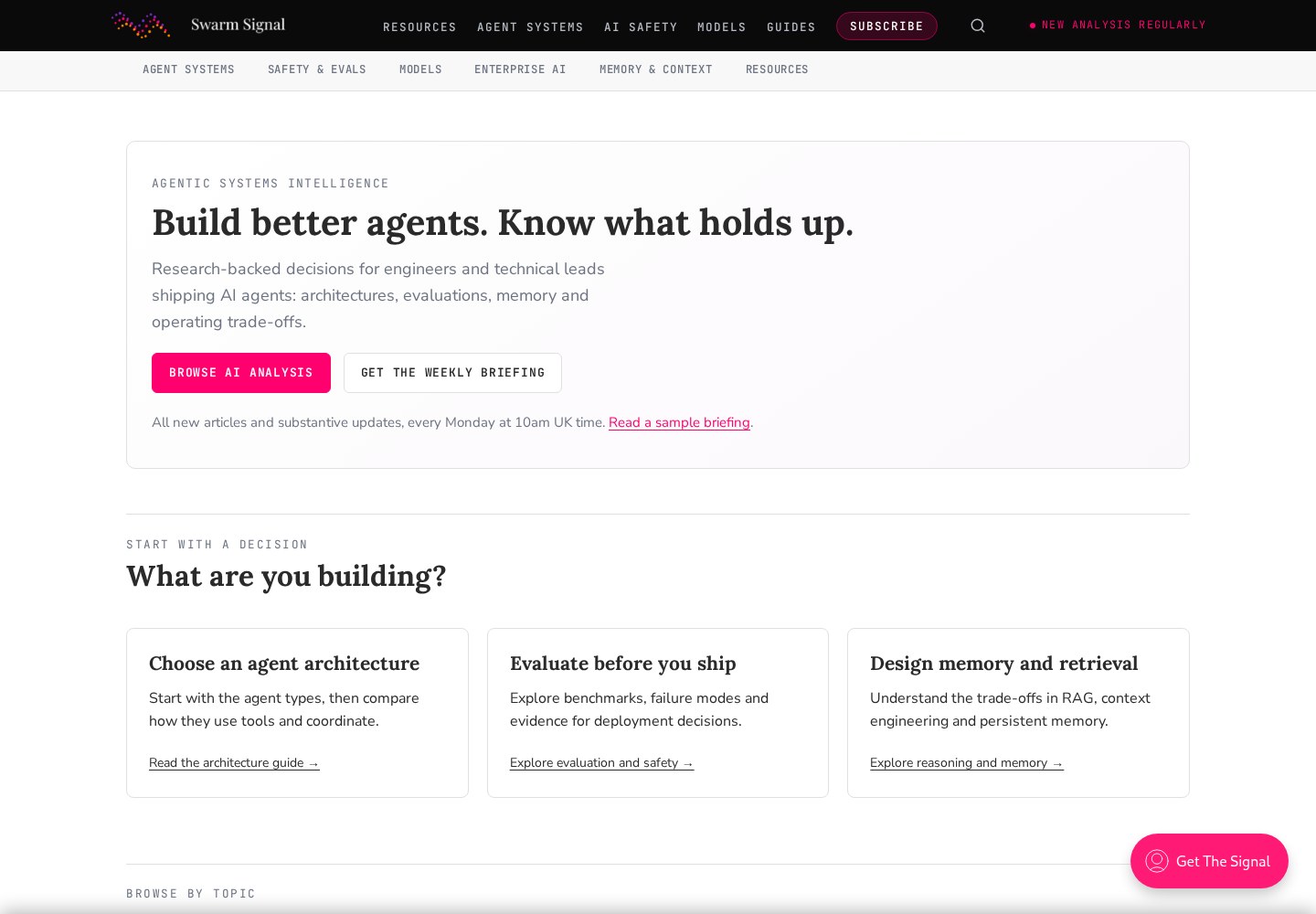
ProductAI research publication
ForEngineers & technical leads
ExperienceRead, explore & listen
Connection to the kitHelped shape IntelligenceOS
01 / The starting point
A publishing workflow
had become a product.
Swarm Signal brings together research on AI agents, evaluations, memory and the decisions involved in using them. The aim is to help a reader understand what a piece of research means for something they are building.
The early project records describe a chain of research, drafting, checks, publication and optional audio. They also record the less tidy side: scattered scripts, unclear ownership and several places where a change could affect the live site.
That is a familiar point in an AI-led project. Individual parts work, but carrying on becomes harder because the next session has to work out how everything fits together. I needed that understanding to live with the project.
02 / Making it useful
Help the reader find
the right kind of answer.
A publication needs more structure than a feed of recent posts. A reader looking for an introduction needs something different from someone comparing an architecture or investigating a failure.
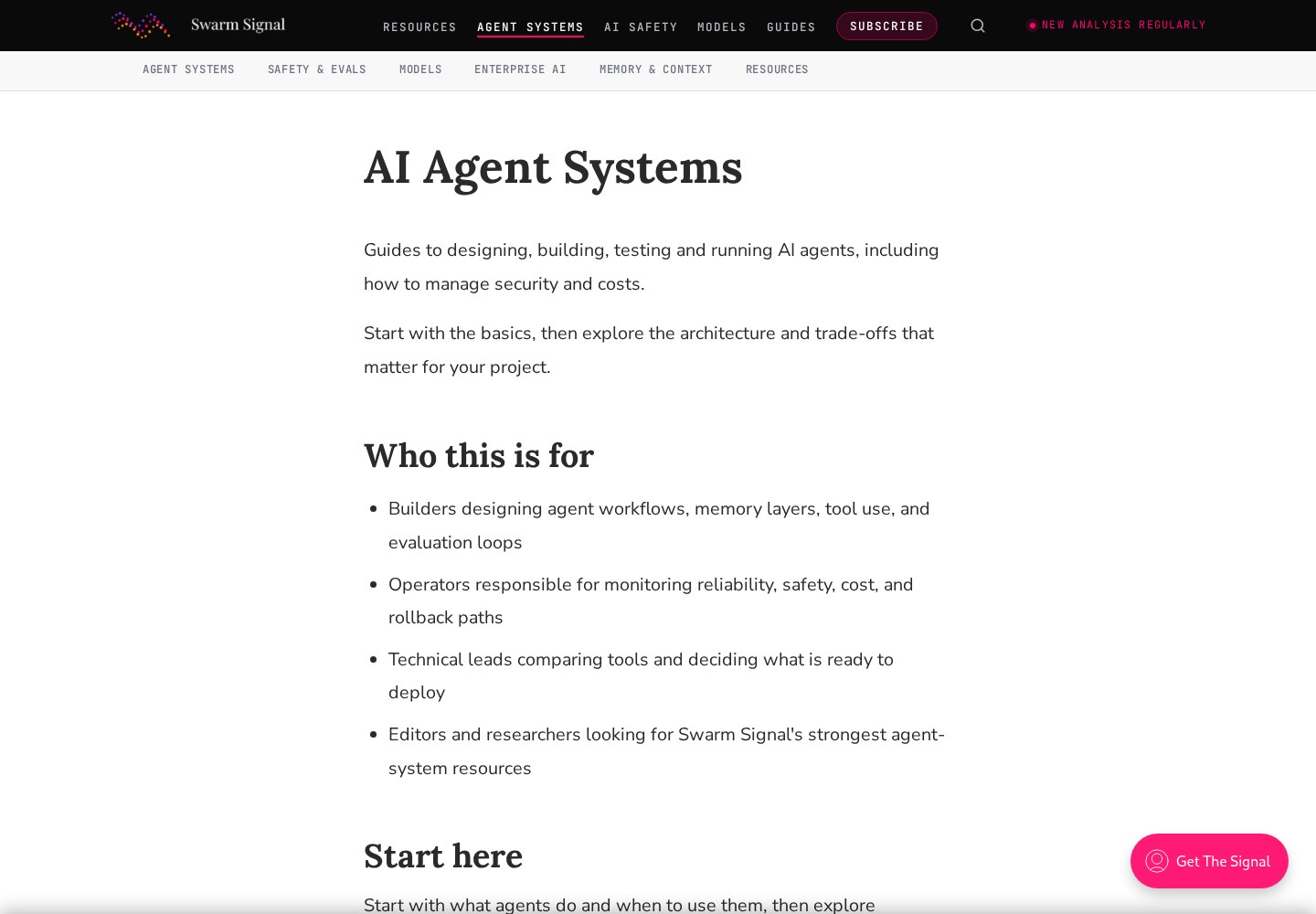
The 9 June project record describes six research topics and eight editorial formats, with each article assigned a topic and a format. It also identifies gaps and uneven coverage. That gave future work a direction beyond generating another article.
You can see the reader-facing side today: topic hubs, starting points and related coverage. The structure helps turn a growing archive into something a person can navigate.
03 / Beyond the draft
The experience continues
after the writing stops.
An article brings several pieces together: the argument, the sources, the images, the page layout and, where available, an audio version. Each needs to belong to the same piece of work.
The project history maps those handovers explicitly. Research becomes a draft; checks sit before publication; audio has its own queue and player. Keeping the stages visible makes it easier to see what is ready and what still needs attention.
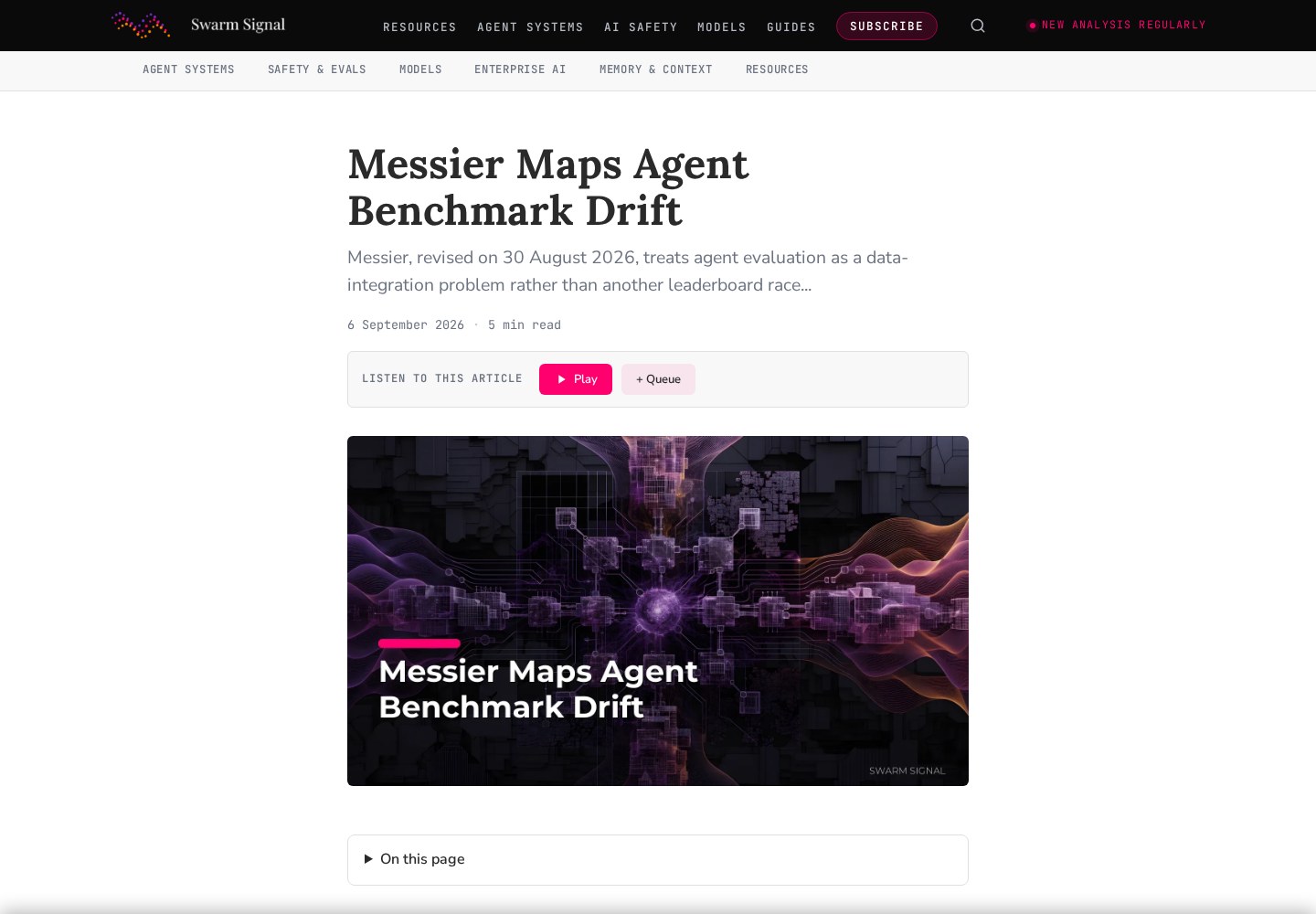
The live article below shows the result a reader encounters: a dated piece of analysis with a listening option and a source trail further down the page. Maintaining that experience is ongoing product work.
04 / What carried forward
Give the next agent
something solid to inherit.
Swarm Signal helped shape the methods I later packaged into IntelligenceOS: map what exists, write down the rules, make the stages clear and keep decisions available for the next session.
The useful lesson for me was that a capable agent still needs a system around it. It needs to know who the work is for, which sources and files matter, what good looks like and where it must stop for review.
IntelligenceOS packages that starting structure for your own project. It maps supported local files and provides briefs, instructions and workflows. Swarm Signal’s publishing and audio systems were separate development work.
This is one of my own projects and part of the kit’s origin story. For a later build that started with IntelligenceOS itself, read the Strains case study.
Build on the lessons
Give your AI projects
a stronger start.
Start with a clear brief, a project map and working rules your agents can follow.
Reconstructed from my Swarm Signal discovery and project knowledge records, including the 9 June 2026 editorial structure review. Screenshots show the public site on 7 September 2026. This is a founder’s development story, with no claim about customer results or time saved.